500 hunters · 500 laptops · 1,000 total
A man, a laptop,
and a pile of powder.
Lock a Hunter and a Laptop together, burn $DUST, and the rig starts drawing $SGOV — tokenized T-bills, bought on the open market with secondary royalties the collection actually earned.
Minting burns 100,000 $DUST — two per wallet. Locking burns more. None of it comes back, and none of it pays anybody — the $DUST is simply gone, and the supply is smaller. What you earn comes from fees, which means when trading stops, earning stops. There is no emissions schedule hiding behind the number.
Open the floor Read the mechanics
WHAT A RIG IS
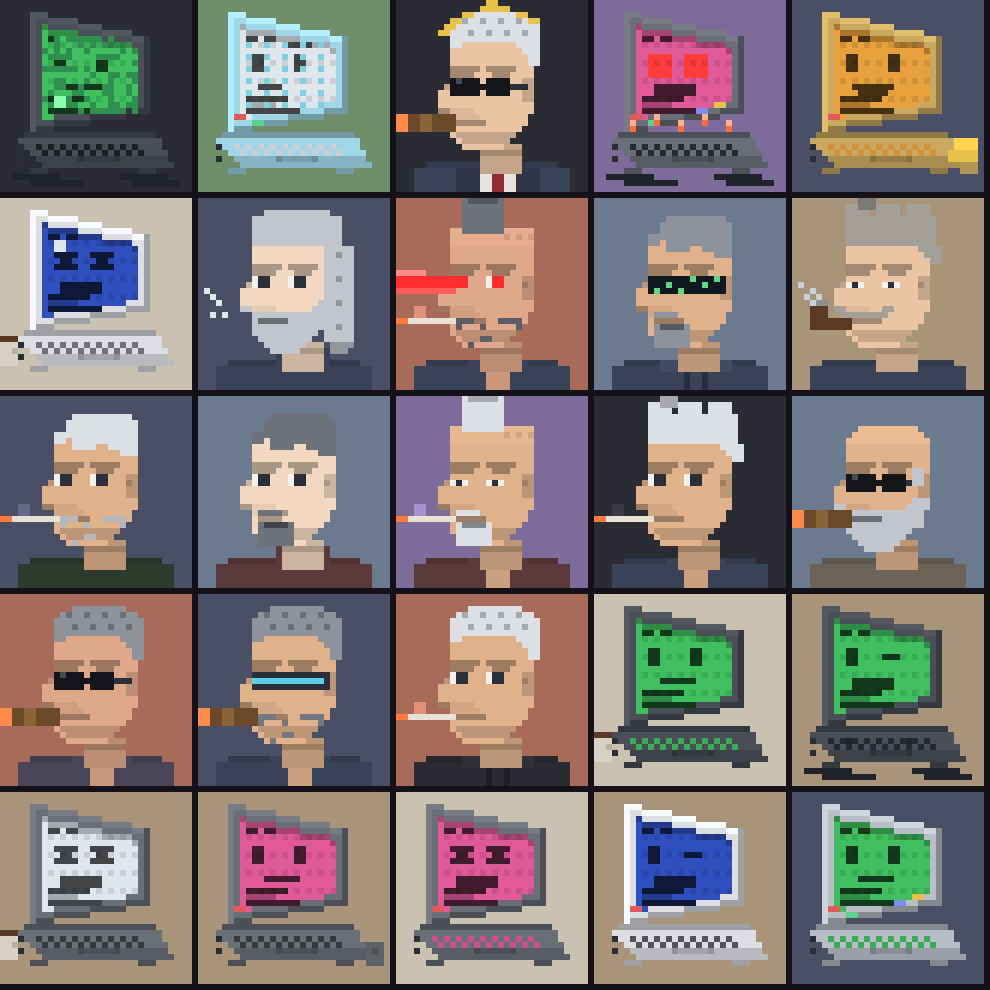
One Hunter. One Laptop. Neither works alone.
Mint
Burn 100,000 $DUST and draw a token from what's left. Half the collection are Hunters, half are Laptops, and you don't choose which you get.
Lock the pair
Send in one of each and burn $DUST again — more for a rarer Hunter. Both NFTs sit in the vault while the rig runs.
Earn
Secondary royalties buy $SGOV and split it across every locked rig by tier weight. Claim whenever; it accrues whether you watch or not.
Unlock
Take both back whenever you like. The rig stops earning, you keep what it already made, and the burned $DUST stays burned.
Because a rig needs one of each, 1,000 tokens can only ever be 500 rigs — and only if the market pairs them up perfectly. Every Hunter without a Laptop is idle capital looking for a counterparty, which is the point: the collection has a reason to trade with itself.
WHERE THE $SGOV COMES FROM
Every fee the protocol collects is divided one way, on-chain, every time.
| Share | Goes to |
|---|---|
| 80% | Market-buys tokenized $SGOV → paid out to locked rigs |
| 10% | Market-buys $DUST → burned, permanently |
| 10% | Team |
The burn pays nobody
$DUST burned at mint and at lock is destroyed. It is not collected, not redistributed, not sitting in a treasury. If the reward came out of the burn, this would just be a machine for handing you back your own money.
Fees stop, earning stops
Nothing is minted to cover a payout. A quiet month pays less and the contract says so plainly. $SGOV is the boring end of the risk curve on purpose — the T-bill rate on money traders already spent.
TIERS
The Hunter sets the rig's weight. The Laptop is the second key, not a multiplier — its traits are cosmetic.
| Tier | Supply | Earns | Lock cost |
|---|---|---|---|
| Scout | 310 | 1.00× | 1.00× |
| Tracker | 125 | 1.35× | 1.35× |
| Marksman | 55 | 1.80× | 1.80× |
| Apex | 10 | 3.00× | 3.00× |
An Apex earns 3× and costs 3× to lock. Tier buys leverage on the fee pool, not free money — which is why a rare Hunter is worth running, not just worth more.
THE MINT IS A BURN
100,000 $DUST per token
There is no mint price in ETH and no treasury on the other side. You burn $DUST and a token appears. Mint the collection out and 100,000,000 $DUST — a tenth of the entire supply — is gone permanently.
Two per wallet
The mint is capped at two tokens per address — exactly one rig's worth. It isn't a sybil defence and isn't sold as one; anyone can use more wallets. It stops a single buyer sweeping the float in one transaction, which for a paired collection would leave nobody to pair with.
Fixed before it opened
Every token's kind and tier was decided by a seeded generator, the ids shuffled, and the whole thing hashed. That hash is published and sealed on-chain before a single mint. Re-run the generator with the seed and check it yourself.
OVERCLOCK
One roll per rig. Take it or don't — the rig runs fine either way.
75% — the rig earns 3× forever
Weight triples for as long as it stays locked. An Apex that wins is pulling 9.00× against a Scout's 1.00×, out of the same fee pool.
25% — both NFTs are destroyed
The Hunter and the Laptop are burned. Not returned, not locked forever — gone from the supply. Whatever the rig had already earned is paid out on the way down.
It resolves in two transactions, and that is deliberate. If the roll settled in the same call that requested it, a bot could simulate the outcome and revert whenever it lost — a 25% risk that costs nothing is not a risk. Requesting now and resolving against a later block means the input does not exist yet when you commit. You also can't unlock while a roll is pending, for the same reason.
TEN 1/1s
Five Hunters, five Laptops. Each exists once, each has something nothing else in the collection has, and the five Hunter 1/1s are also Apex — the rarest art and the heaviest weight are the same ten tokens.
The Founder · Cold Open · Redline · The Analyst · Last Call
Terminal Zero · Bluescreen · Bullion · Glasshouse · Overclocked
The Hunter 1/1s carry Apex weight, 3.00×. The Laptop 1/1s carry none — a Laptop is the second key to a rig, never a multiplier.
Which ids are 1/1s was fixed by the seeded generator and is inside the published provenance hash, like everything else.
FAQ
Is this a ponzi?
A ponzi pays early holders out of later deposits and has to keep paying. This can't. The payout is bought with royalties already collected, and the $DUST you burn goes to nobody. Zero fees means zero payout — an outcome a ponzi structurally cannot survive.
Do I get my $DUST back when I unlock?
No. It was burned. The burn buys the lock, not a permanent right to earn — so re-locking later costs again. Unlocking returns both NFTs and settles what you're owed, nothing more.
Why do I need two NFTs?
Because a hunter with no laptop earns nothing and a laptop with no hunter earns nothing. It halves the number of working rigs and forces the two halves of the collection to find each other.
Where's the token?
$DUST does not exist yet and there's no date on it. It will launch through Pons on Robinhood Chain — fixed supply, no mint function after launch, trading against WETH. The floor is open first so holders can use the thing before there's anything to buy. Anyone selling you $DUST today is selling you nothing.
Is the burn real?
Yes — $DUST is a standard burnable ERC-20, so minting and locking
destroy tokens outright. totalSupply falls and you can
watch it fall on any explorer. Nothing is parked at a dead address and
called a burn.